


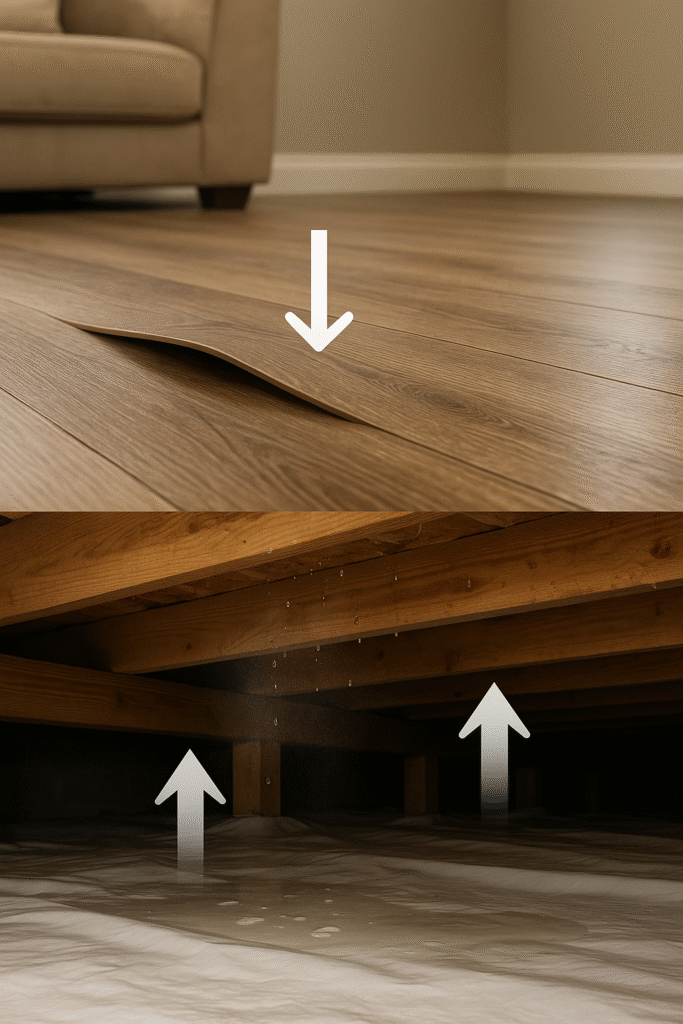
Luxury Vinyl Plank (LVP) flooring is a popular choice for Florida homeowners. It’s sleek, durable, and water-resistant — but if your home has a crawl space that isn’t encapsulated, your beautiful floors could be at serious risk.
Many homeowners across the Florida Panhandle — from Pensacola to Destin and Panama City Beach — are noticing buckling floors, moldy smells, and soft spots underfoot. Often, the cause lies beneath your home, in the crawl space.
Let’s break down why LVP and unencapsulated crawl spaces don’t mix — and what you can do to prevent moisture damage before it compromises your floors and structure.
The Problem: Crawl Space Moisture + LVP = Trouble
Florida’s climate is hot and humid, especially in coastal areas like Fort Walton Beach and Navarre. When you have a vented crawl space under your home, that humid outdoor air moves freely underneath your floor.
Now add in air conditioning. Your living space becomes cool and dry, while the crawl space stays warm and moist. That difference in temperature and humidity creates a powerful moisture movement — and your LVP floor becomes the battleground.
Here’s how it unfolds:
- Condensation: The LVP acts as a cold surface. When warm, humid air from the crawl space rises and hits the cooler underside of your floor, it condenses — just like a cold drink on a hot day.
- Trapped moisture: LVP doesn’t breathe like wood. Moisture gets stuck between the planks and the subfloor, creating the perfect conditions for mold and mildew.
- Subfloor damage: Over time, your subfloor can swell, soften, and rot. OSB and plywood will begin to delaminate and lose their strength.
- Floor failure: Buckling, warping, cupping — these are all signs your LVP is failing. In severe cases, the vinyl planks themselves may separate or peel.
- Structural rot: Beyond flooring damage, moisture encourages wood-decay fungi to grow on floor joists and beams. This leads to long-term structural issues that compromise your home’s safety.
Why a Basic Vapor Barrier Isn’t Enough
A lot of homes in Northwest Florida were built with a simple ground vapor barrier in the crawl space — a thin plastic sheet laid over the soil. While this helps reduce moisture from the ground, it doesn’t stop the humid air coming through vents or gaps in the foundation.
That means your subfloor is still exposed to the same moisture-laden air that caused the problem in the first place.
The Solution: Crawl Space Encapsulation
To truly protect your home — and your floors — you need to encapsulate the crawl space.
Crawl space encapsulation is the process of sealing the entire area beneath your home. This includes:
- Installing a heavy-duty vapor barrier on the floors and walls
- Sealing off vents and openings to stop humid air from entering
- Conditioning the space with a dehumidifier to maintain proper humidity levels
When your crawl space is encapsulated, you create a clean, dry, stable environment that prevents moisture from reaching your subfloor and damaging your LVP.
Thinking About Installing LVP in Your Florida Home?
If you’re planning to upgrade to LVP flooring — or already have — it’s critical to address your crawl space first. Encapsulation isn’t just an optional upgrade. It’s essential for protecting your investment and preserving your home’s structural integrity in Florida’s humid climate.
Call Emerald Coast Foundation Repair Today
At Emerald Coast Foundation Repair, we help homeowners across the Florida Panhandle solve crawl space moisture issues for good. Whether you’re in Pensacola, Fort Walton Beach, or Panama City, our team of local experts can inspect your crawl space and recommend the right encapsulation system for your home.
Don’t wait until your floors buckle or your subfloor rots. Call us today or schedule your free inspection to protect your home from the ground up.