


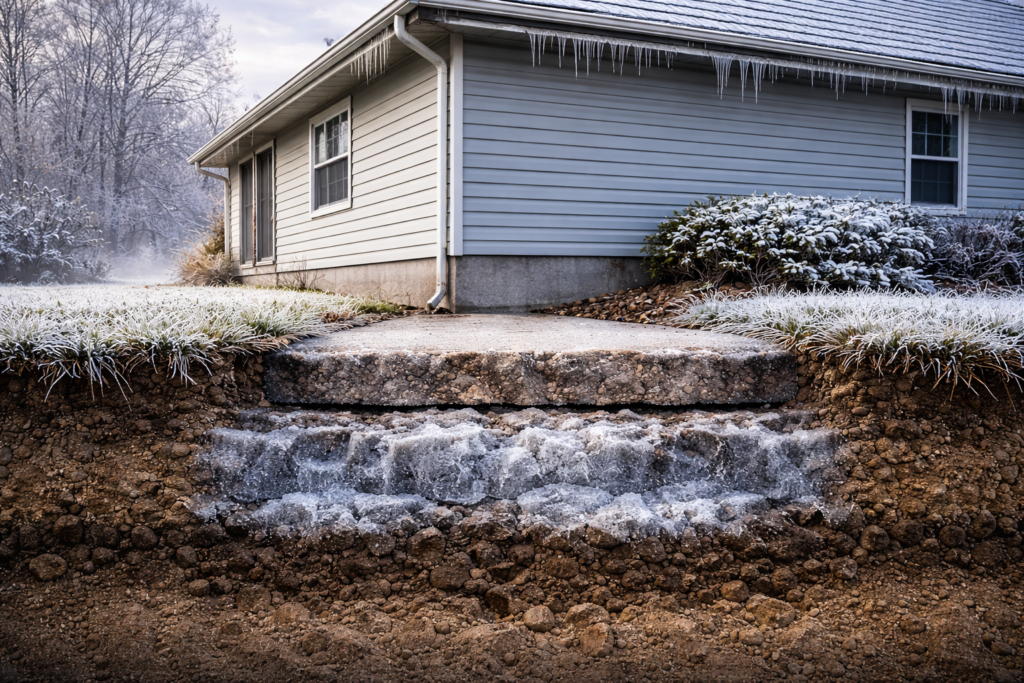
February in Northwest Florida can be unpredictable. One week feels like spring, and the next brings a sudden cold snap. While freezing temperatures are rare, even short periods of cold weather can affect your home’s foundation.
Many homeowners in Pensacola, Panama City, Destin, and Fort Walton Beach do not realize that temperature changes in late winter can create soil movement and structural stress.
Here is what you need to know.
How February Cold Snaps Affect Foundations
Soil Contraction During Cold Weather
When temperatures drop quickly, the moisture in the soil contracts. In Florida’s sandy and mixed soils, this contraction can cause the ground to shift slightly away from the foundation.
That movement may lead to:
- Minor settling
- Small foundation gaps
- Increased stress on slab edges
- Movement in crawl space piers
Even subtle changes can add up over time.
Rebound Movement When Temperatures Rise
After a cold snap, warmer days often follow. The soil expands again as temperatures and moisture levels rise.
This repeated cycle of contraction and expansion creates ongoing stress beneath your home. Over time, that stress can lead to visible foundation problems.
Signs of Foundation Stress After a Cold Snap
Homeowners should look for:
- New hairline cracks in drywall
- Cracks forming in tile floors
- Doors that suddenly stick
- Slight separation at trim or baseboards
- Crawl space moisture changes
If these issues appear shortly after a temperature shift, your foundation may be reacting to soil movement.
How to Protect Your Foundation in Late Winter
Maintain Proper Drainage
Even during cooler months, proper drainage is essential. Make sure gutters and downspouts direct water away from your home.
Monitor Crawl Space Conditions
Cold snaps followed by warmer days can increase condensation under your home. If you have a crawl space, moisture control and encapsulation help stabilize conditions.
Schedule a Seasonal Inspection
Late winter is an ideal time for a foundation inspection before spring rains begin. Catching early movement can prevent larger structural repairs later in the year.
Protect Your Home Before Spring Arrives
February weather may seem mild compared to other parts of the country, but Gulf Coast homes still experience soil movement and foundation stress.
If you have noticed cracks, sticking doors, or crawl space moisture issues, schedule a free foundation inspection with Emerald Coast Foundation Repair today.